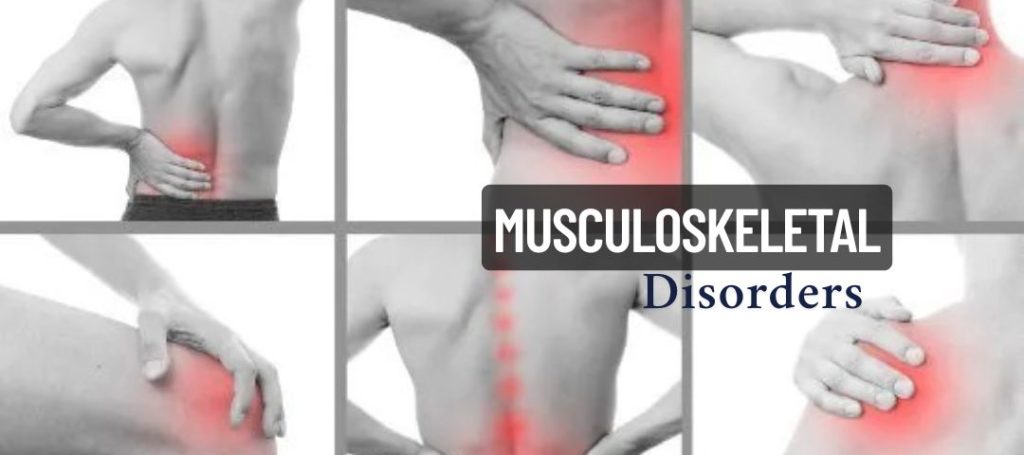
Musculoskeletal disorders are a group of conditions that can affect the joints, muscles, and bones. There are conditions, such as back pain, arthritis, osteoporosis, and tendonitis. Symptoms of musculoskeletal disorders may include pain and a loss of mobility.
They can be broadly categorized into the following types:
- Musculoskeletal Causes
i. Strains and sprains: These are injuries to the muscles or ligaments of the back, often due to lifting heavy objects, sudden movements, or poor posture.
ii. Muscle Spasms: Involuntary contractions of back muscles, often caused by overuse or injury.
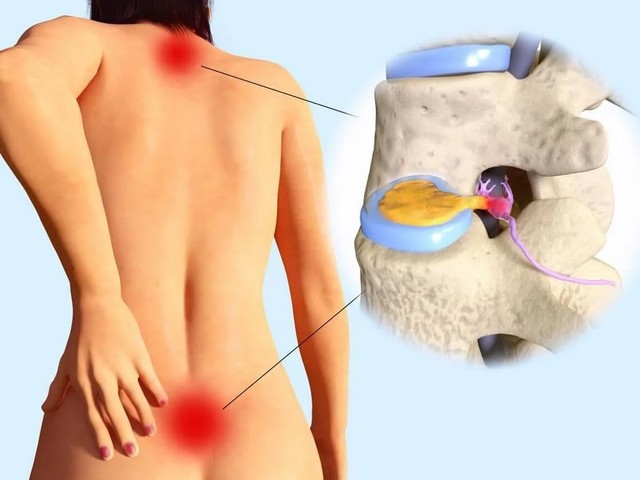
iii. Herniated Disc: When the soft material inside a spinal disc pushes out through a tear in the tougher exterior, causing pain and possibly nerve irritation.
iv. Degenerative Disc Disease: The breakdown of spinal discs over time, leading to pain and reduced mobility. - Structural Problems
i. Scoliosis: A sideways curvature of the spine that can cause back pain if severe.
ii. Kyphosis: Excessive outward curvature of the spine, leading to a hunched back.
iii. Lordosis: Excessive inward curvature of the spine, sometimes causing lower back pain.
iv. Spinal Stenosis: Narrowing of the spinal canal, which can put pressure on the spinal cord and nerves. - Inflammatory and Infectious Conditions
i. Ankylosing Spondylitis: A type of arthritis that primarily affects the spine, leading to inflammation, pain, and stiffness.
ii. Spinal Infections: Infections like osteomyelitis or discitis can cause severe back pain. - Non-spinal Causes
i. Kidney Stones: Can cause referred pain in the lower back.
ii. Endometriosis: In women, this can cause referred pain to the lower back.
iii. Fibromyalgia: A chronic condition characterized by widespread pain, including back pain. - Nerve and Neurological Causes
i. Sciatica: Pain that radiates along the sciatic nerve, often caused by a herniated disc or spinal stenosis.
ii. Peripheral Neuropathy: Damage to the peripheral nerves can lead to back pain. - Musculoskeletal Causes.
i. Degenerative Disc Disease: The breakdown of spinal discs over time, leading to pain and reduced mobility. a. Strains and sprains: These are injuries to the muscles or ligaments of the back, often due to lifting heavy objects, sudden movements, or poor posture.
ii. Muscle Spasms: Involuntary contractions of back muscles, often caused by overuse or injury.
iii. Herniated Disc: When the soft material inside a spinal disc pushes out through a tear in the tougher exterior, causing pain and possibly nerve irritation. - Structural Problems
i. Scoliosis A sideways curvature of the spine that can cause back pain if severe.
ii. Kyphosis: Excessive outward curvature of the spine, leading to a hunched back.
iii. Lordosis: Excessive inward curvature of the spine, sometimes causing lower back pain.
iv. Spinal Stenosis: Narrowing of the spinal canal, which can put pressure on the spinal cord and nerves. - Inflammatory and Infectious Conditions.
i. Ankylosing Spondylitis: A type of arthritis that primarily affects the spine, leading to inflammation, pain, and stiffness.
ii. Spinal Infections: Infections like osteomyelitis or discitis can cause severe back pain. - Non-spinal Causes
i. Kidney Stones: Can cause referred pain in the lower back.
ii. Endometriosis: In women, this can cause referred pain to the lower back.
iii. c. Fibromyalgia: A chronic condition characterized by widespread pain,
including back pain. - Nerve and Neurological Causes
i. Sciatica: Pain that radiates along the sciatic nerve, often caused by a herniated
disc or spinal stenosis.
ii. Peripheral Neuropathy: Damage to the peripheral nerves can lead to back pain.